Introduction
Every year, the technology industry introduces a new set of buzzwords that promise to transform businesses overnight. In reality, most organizations are less concerned with chasing the latest trend and more focused on solving practical problems—improving efficiency, reducing costs, strengthening security, and staying competitive.
As we move through 2026, the conversation around technology is becoming more mature. Companies are no longer asking, "What is the next big thing?" Instead, they're asking, "Which technologies can deliver measurable value today?"
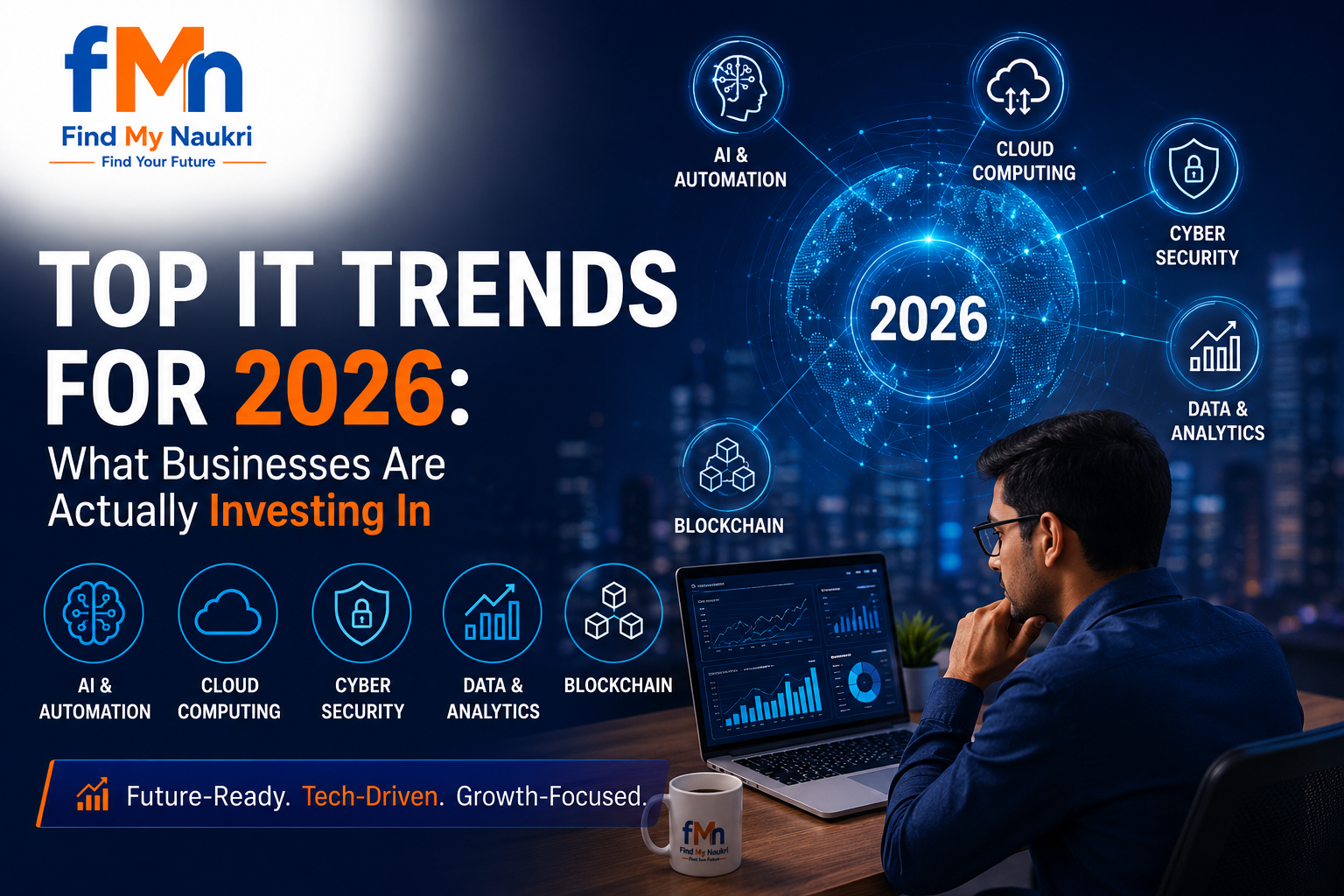
Based on current industry adoption patterns and business priorities, here are the IT trends that are making the biggest impact in 2026.
AI Moves From Experimentation to Everyday Operations
The biggest shift in 2026 is not the rise of artificial intelligence—it's the normalization of it.
Over the past few years, organizations have experimented with AI tools for content creation, coding assistance, and customer support. Now, many companies are integrating AI directly into daily workflows.
Businesses are using AI to:
- Automate repetitive tasks and workflows
- Enhance customer service with chatbots and virtual assistants
- Improve decision-making through data analysis and insights
- Accelerate software development and code generation
- Personalize user experiences at scale
Cybersecurity Becomes a Boardroom Priority
Cybersecurity is no longer just an IT department concern.
With ransomware attacks, data breaches, and increasingly sophisticated phishing campaigns, business leaders are becoming more involved in security planning than ever before.
Organizations are investing in:
- Zero-trust security frameworks
- Multi-factor authentication
- Continuous security monitoring
- Employee security awareness training
- Cloud security solutions
The focus for 2026 is on protecting sensitive data and ensuring business continuity in the face of evolving cyber threats.
Cloud Optimization Replaces Cloud Migration
A few years ago, the goal was simple: move everything to the cloud.
In 2026, the focus has changed.
Many organizations have already completed their cloud migration journeys. The challenge now is managing cloud costs, improving performance, and ensuring scalability.
Businesses are evaluating:
- Hybrid cloud environments
- Multi-cloud strategies
- Cloud cost management tools
- Performance optimization initiatives
The conversation has shifted from "Should we move to the cloud?" to "How can we get more value from our cloud investment?"
Automation Continues to Reduce Manual Work
Companies across industries are looking for ways to eliminate repetitive processes.
Automation tools are helping businesses streamline operations in areas such as:
- Finance and accounting
- Human resources
- Customer support
- Software testing
- IT infrastructure management
The goal isn't necessarily reducing headcount. Instead, businesses are enabling employees to focus on higher-value work while software handles routine tasks.
Edge Computing Expands Beyond Large Enterprises
As connected devices continue to grow, processing data closer to where it's generated is becoming increasingly important.
Industries such as manufacturing, healthcare, logistics, and retail are adopting edge computing to improve:
- Real-time decision making
- System responsiveness
- Network efficiency
- Operational reliability
While edge computing was once viewed as an enterprise-only technology, adoption is becoming more widespread as implementation costs decrease.
Sustainable IT Becomes a Business Objective
Sustainability is no longer just a corporate responsibility initiative.
Many organizations are now evaluating the environmental impact of their technology infrastructure and making decisions that support long-term efficiency.
- Energy-efficient data centers
- Cloud resource optimization
- Hardware lifecycle management
- Green software development practices
For many businesses, sustainability initiatives are also helping reduce operational costs.
Skills and Talent Remain a Major Challenge
Despite advances in automation and AI, skilled technology professionals remain in high demand.
Organizations continue to face challenges in hiring and retaining talent in areas such as:
- Cybersecurity
- Cloud architecture
- Data engineering
- Artificial intelligence
- Software development
As a result, businesses are investing more heavily in employee training, certification programs, and internal upskilling initiatives.
Conclusion
The most important IT trend in 2026 isn't a specific technology. It's the growing focus on practical business outcomes.
Organizations are becoming more selective about where they invest. Rather than adopting technology because it's popular, they're prioritizing solutions that improve efficiency, strengthen security, and support long-term growth.
The companies that succeed in 2026 won't necessarily be the ones using the newest tools. They'll be the ones that apply technology strategically to solve real business challenges.
Technology continues to evolve rapidly, but the fundamentals remain the same: create value, improve operations, and deliver better experiences for customers and employees alike.