React JS: The Ultimate Library for Modern Web Development
React JS is one of the most popular JavaScript libraries for building fast, interactive, and scalable user interfaces. Developed and maintained by Meta (formerly Facebook), React has transformed the way developers create web applications by introducing a component-based architecture and efficient rendering through the Virtual DOM.
What is React JS?
React JS is an open-source JavaScript library used primarily for building user interfaces, especially for Single Page Applications (SPAs). It allows developers to create reusable UI components that manage their own state and efficiently update when data changes.
React focuses only on the view layer of an application, making it flexible and easy to integrate with other libraries and frameworks.
Key Features of React JS
1. Component-Based Architecture
React applications are built using components. Each component represents a part of the user interface and can be reused throughout the application.
function Welcome() {
  return <h1>Welcome to React JS</h1>;
}
2. Virtual DOM
React uses a Virtual DOM to improve performance. Instead of updating the entire webpage, React updates only the elements that have changed, resulting in faster rendering and a smoother user experience.
3. JSX Syntax
JSX (JavaScript XML) allows developers to write HTML-like code inside JavaScript, making code easier to read and maintain.
const element = <h2>Hello React Developer!</h2>;
4. One-Way Data Binding
React follows a unidirectional data flow, making applications more predictable and easier to debug.
5. React Hooks
Hooks allow developers to use state and lifecycle features in functional components.
import { useState } from 'react';

function Counter() {
  const [count, setCount] = useState(0);

  return (
    <button onClick={() => setCount(count + 1)}>
      Count: {count}
    </button>
  );
}
Benefits of Using React JS
High Performance
React's Virtual DOM minimizes direct DOM manipulation, resulting in faster application performance.
Reusable Components
Developers can create reusable components, reducing development time and improving code maintainability.
Strong Community Support
React has a massive developer community, extensive documentation, and thousands of third-party libraries.
SEO-Friendly Applications
React applications can be optimized for search engines using server-side rendering frameworks like Next.js.
Easy Learning Curve
Developers familiar with JavaScript can quickly learn React and start building applications.
React JS Ecosystem
React is often used alongside other tools and libraries:
- React Router for navigation
- Redux for state management
- Axios for API requests
- Next.js for server-side rendering
- Material UI for modern UI components
- Tailwind CSS for styling
Real-World Applications Built with React
Many leading companies use React for their web applications because of its scalability, performance, and maintainability.
- Netflix
- Airbnb
- Uber
- WhatsApp Web
- Dropbox
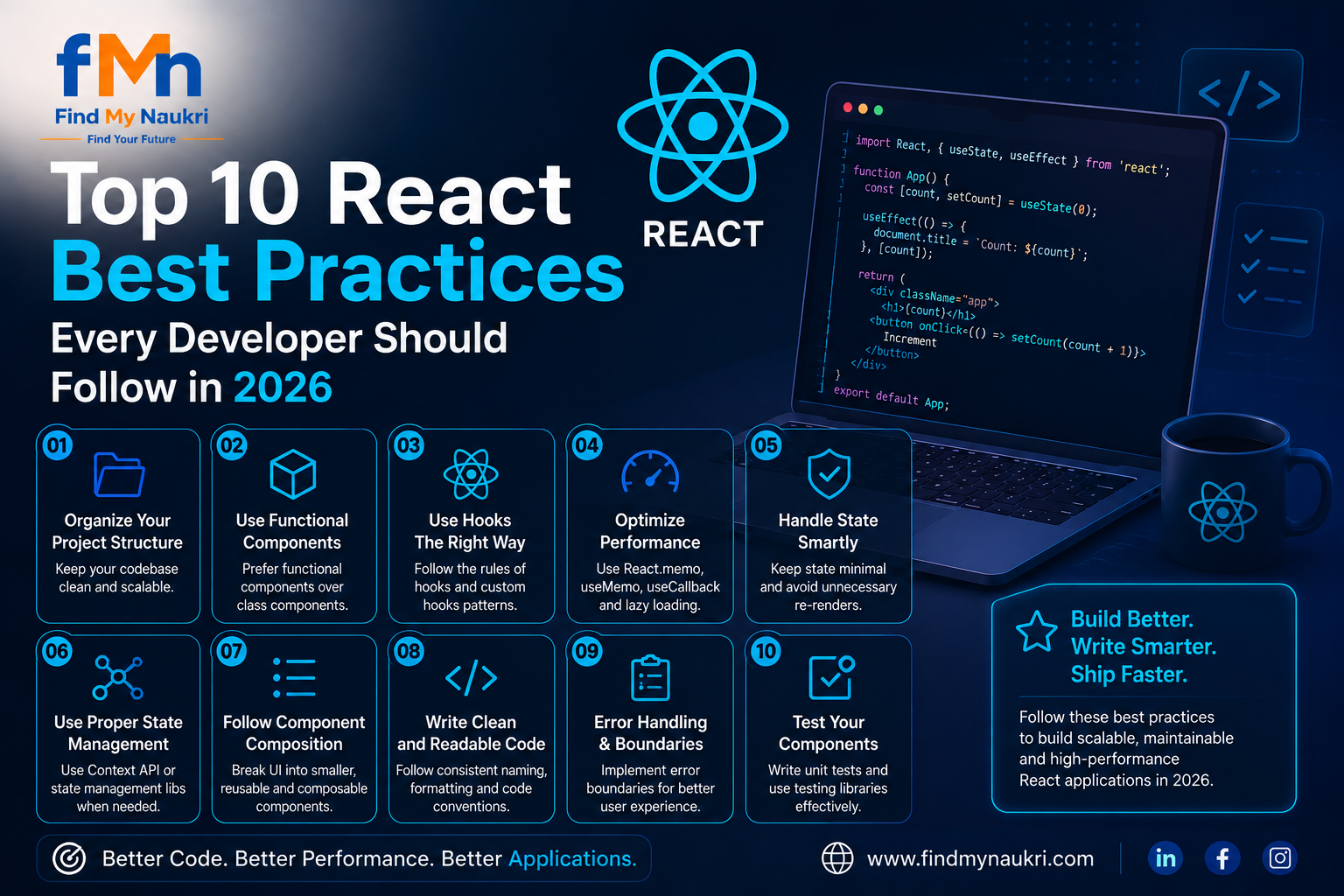
React JS Best Practices
Keep Components Small
Small components are easier to test, maintain, and reuse.
Use Functional Components
Modern React development favors functional components with Hooks over class components.
Optimize Performance
Use techniques such as memoization, lazy loading, and code splitting to improve application speed.
Manage State Effectively
Choose appropriate state management solutions based on application complexity.
Career Opportunities in React JS
React developers are among the most sought-after professionals in the software industry. Common job roles include:
- React Developer
- Frontend Developer
- JavaScript Developer
- Full Stack Developer
- UI Developer
- Software Engineer
With the growing demand for modern web applications, React skills can significantly enhance career prospects and earning potential.
Conclusion
React JS has become a leading technology for building modern web applications. Its component-based architecture, Virtual DOM, flexibility, and extensive ecosystem make it an excellent choice for developers and businesses alike.
Whether you are a beginner learning web development or an experienced engineer building enterprise applications, React provides the tools and capabilities needed to create fast, scalable, and user-friendly applications.